
Unit 2 – The Constitution: Evaluate the view that devolution has been a success
There are two ways to look at this question. One would be to consider it thematically, based around the aims for devolution and whether these have been met. Another approach might be to look at the success of devolution in each of the devolved administrations. Here, is the more thematic approach:

One of the aims of devolution was to enhance democracy:
This has been achieved by allowing the devolved powers to make laws that suit their local populations rather than have Westminster make laws on their behalf. This was a problem because Welsh, Scottish and Northern Irish MPs never held the balance of power at Westminster and therefore could never shape laws that could benefit the nations they represented.
In the devolved administrations there have been many notable examples whereby laws have been passed that are particular to their populations needs:
- University tuition for Scottish students is free. Far from being done to annoy the English, this was a pragmatic policy to help more Scottish students, who had lowers educational outcomes and were less wealthy, attend university.
- There are no charges on medical prescriptions in Scotland, Wales and Northern Ireland.
- There are no SATs tests or league tables in Scotland and Wales
- The Welsh curriculum stipulates the teaching of Welsh as a language. Prior to devolution, the national curriculum for all of the UK would not have stipulated this.
Has this been a success?
Whilst each Parliament has had its own areas of competence (issues over which they can make law) such as the environment and health, there are still many areas over which they have no say. For example, none of the devolved parliaments have any say over foreign policy. The SNP have stated their opposition to Donald Trump’s presidency but cannot affect Scottish relations with the President because these are controlled by the UK government.
Since 1999 the UK government has followed the Sewell Convention, which states that they will not legislate on any issue that has been devolved without the consent of the devolved administrations. In the first 25 years of devolution, consent has only been denied by any of the administrations on 28 occasions out of 220 acts of Parliament passed. Nonetheless, it is just a convention, and even if the devolved administrations withhold consent, the UK Parliament can still proceed anyway. This was done most notably with the UK’s exit from the European Union.
Brexit
One of the greatest failures of devolution has been Brexit. Brexit has presented a difficulty for devolution because both Scotland and Northern Ireland voted to remain in the European Union. In fact, in Scotland, 62% of the population voted to remain thereby making the imposition of Brexit difficult for many in Scotland to swallow. In fact, the Scottish government have estimated that they will lose 4% of their GDP each year owing to declining trade with the EU.
The Scottish Parliament even passed its own Brexit bill in 2018 because they were angry at the Brexit Withdrawal bill passed by the Westminster Parliament. The EU Withdrawal Act would have seen powers that had once been exercised by the EU, like food standards, come under the remit of the UK government, despite them technically being areas which were usually devolved. The case went to the UK Supreme Court who ruled that Scotland had to accept the EU Withdrawal Act. So, following Brexit, even many areas that should have been devolved to Scotland, Wales and Northern Ireland are now being decided by the UK government, a severe blow for devolution.
Brexit has also produced some significant problems for Northern Ireland. It shares a border with the Republic of Ireland, which is still a member of the EU, making the issue of customs checks along the border one of contention. The solution at the time of the UK’s withdrawal from the EU was that Northern Ireland would remain part of the UK but be subject to the regulations of the EU. Goods coming into Northern Ireland from England would now be subject to customs checks. In effect, the UK government was creating a border between the UK mainland and Northern Ireland. This angered the unionist community in Northern Ireland who saw this as the first step towards a united Ireland.
There have been some steps to rectify the situation, namely the Windsor Agreement, signed by Rishi Sunak in 2023. This agreement reduced the checks that would be expected on goods arriving in Northern Ireland from the UK mainland. Moreover, Northern Ireland no longer had to follow certain EU rules, for example on VAT and alcohol duties. The Windsor Framework also introduced a mechanism called the “Stormont brake”, which would let the Northern Ireland Assembly object to new EU rules which would affect Northern Ireland’s trade arrangements.
Policy Labs
One of the aspects of devolution that is often overlooked is the concept of policy labs. This is where devolved regions will implement a policy and based on its success or failure, other areas will look to implement it themselves.
- An example of this was a ban on smoking in public places which was first introduced in Scotland in 2006. The policy was seen as a success and as such was adopted across England in 2007.
- The policy labs have also worked the other way round. Health is a devolved power for Scotland so were not subject to the phased-out ban on smoking that was introduced by the Sunak government in 2023. However, the Scottish Parliament has also decided it will enact a similar policy.
- Wales introduced a blanket 20mph speed limit on its roads in 2022. The policy has helped to greatly reduce road deaths in Wales and as such has been slowly adopted in other devolved regions. For example, in London, over 264km of road are now subject to a 20mph speed limit.
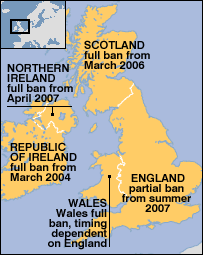
The smoking ban was first introduced in Scotland. The rest of the UK soon followed suit.
End the demand for independence
Another aim of devolution was to reduce the growing demand for independence. Whether devolution has been a success in this respect it up for debate. In fact, if anything, the possibility of independence for parts of the UK are closer now than they were in 1998. Scotland is perhaps the best example here. Despite the considerable number of powers that have been devolved to Scotland, the rise of the SNP has led to further demands for independence, culminating in the 2014 independence referendum. Moreover, it could be argued that Northern Ireland is also now closer to leaving the UK (although this is highly unlikely given its history), seeing as Sinn Fein (a pro united Ireland party) have the most seats and their leader, Michelle O’Neill is the First Minister.
Despite this, we must remember that 55% of Scots voted to remain part of the UK in 2014. Moreover, since the referendum, support for independence has fluctuated and never consistently been above 50%. Therefore, it would appear that devolution has not had much of an impact on driving demand for independence. The same has been true in Wales, where there have never been real demands for independence since devolution began. Though opinion polling is far less regularly undertaken on the topic, it has been rare to find more than 30% of Welsh citizens saying that they would support independence. As mentioned previously, it is almost inconceivable that Northern Ireland would opt to become part of a united Ireland in the near future. Again, polling fluctuates, but it has been rare to see those in favour of a united Ireland reaching above 40%.

Scotland voted No to indpendence in 2014.
Has devolution been successful in weakening independence movements? This has been difficult to judge because we do not know what would have happened had devolution not taken place in 1999. It is possible that the demand for independence would have grown far more considerably then it did if devolution had not taken place. Ultimately, any argument that suggests that devolution galvanised demands for independence is doing so off the basis of the Scottish independence movement, not that of Wales or Northern Ireland. Moreover, Scotland’s independence referendum was a one off event. The SNP was in the ascendency at that time in Scottish politics and independence was their primary goal. Now that the SNP have grown weaker, we can imagine that the demand for independence will subside also.
Northern Irish Peace
One major success of devolution has been that it has helped to ensure peace in Northern Ireland. Prior to devolution, the Northern Irish assembly had not sat since 1974, with the province being governed from Westminster instead. A part of the Good Friday Agreement, which helped to end the Northern Irish Troubles, was that the country’s assembly at Stormont would be restored. Stormont has powers over issues such as agriculture, education and health devolved to it and these devolved powers have allowed the two Northern Irish communities to work together and thereby reduce the likelihood of a return to violence.
Nevertheless, devolution in Northern Ireland has not always been smooth and Stormont has been suspended on 6 occasions since 1999. On each occasion, the UK government has run the province as it had done during the Troubles. For example, between May 2022 and February 2024, the Northern Irish assembly did not sit, owing to a protest being made by the unionist DUP against the Northern Irish protocol, an element of the Brexit agreement. Ultimately however, despite its ups and downs, devolution in Northern Ireland has helped to ensure peace. The creation of a devolved Parliament was a key part of the Good Friday Agreement and without it, it is likely that the violence would have continued. In fact, in the 20 years since devolution, there have been fewer than 200 Troubles related murders. In the 30 years prior, there were around 3,500 murders. The reduction in violence in Northern Ireland must be accepted as a considerable success of devolution.
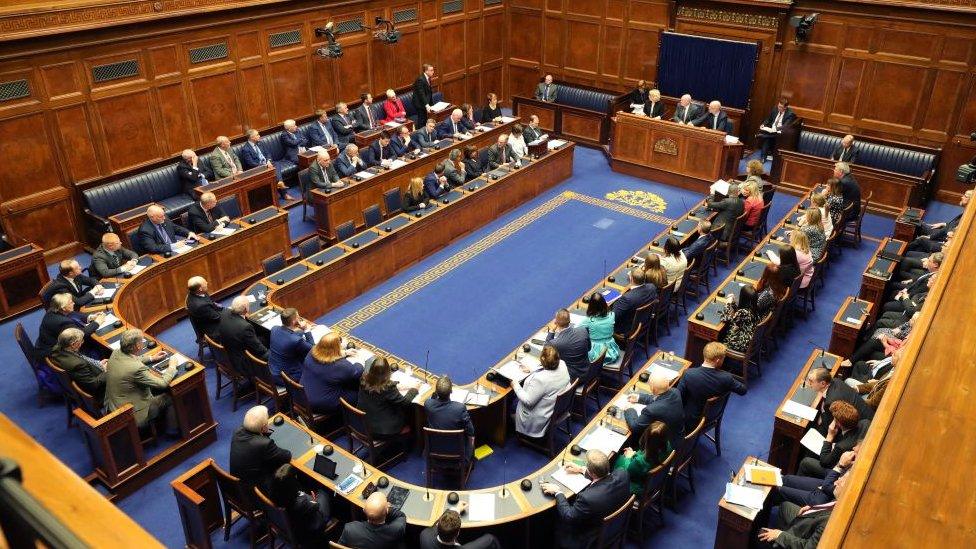
The Northern Irish Assembly at Stormont has not sat for a third of its existence since devolution. However, it has resumed since February 2024.
So, has devolution been a success? I’d argue yes. The suggestion that it has encouraged demands for independence are overstated and this would almost certainly have occurred with devolution anyway. The nations of the UK now have more ability to craft legislation that suits their populations and communities. This democratisation of the UK can only be a good thing and therefore devolution’s successes surely outweigh the failures.