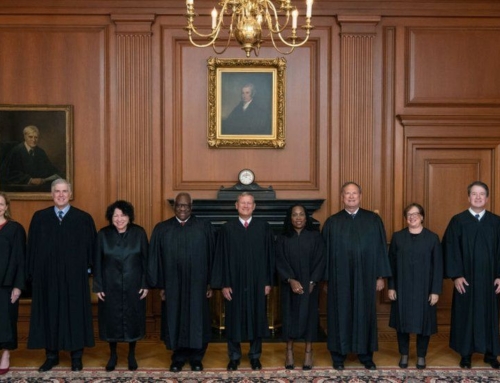
Learning Resources, Inc. v. Trump – The Supreme Court rules against Trump’s tariffs
On 20th February 2026, the US Supreme Court ruled in Learning Resources, Inc. v. Trump that tariffs imposed by President Trump were unconstitutional.
The President had levied tariffs on foreign goods, using the 1977 International Emergency Economic Powers Act, which he believed gave him the power to regulate trade in response to an emergency. The Supreme Court saw differently. In a 6-3 decision, they found that the 1977 law made no reference to the term ‘tariff’ and therefore the President did not have the constitutional power to do so.
What was perhaps most surprising was that the three liberal justices were joined by three more conservative justices, including two appointed by President Trump, Amy Coney Barrett and Neil Gorsuch. Trump said that he was ‘absolutely ashamed’ of the conservative justices and accused them of being ‘lapdogs’.
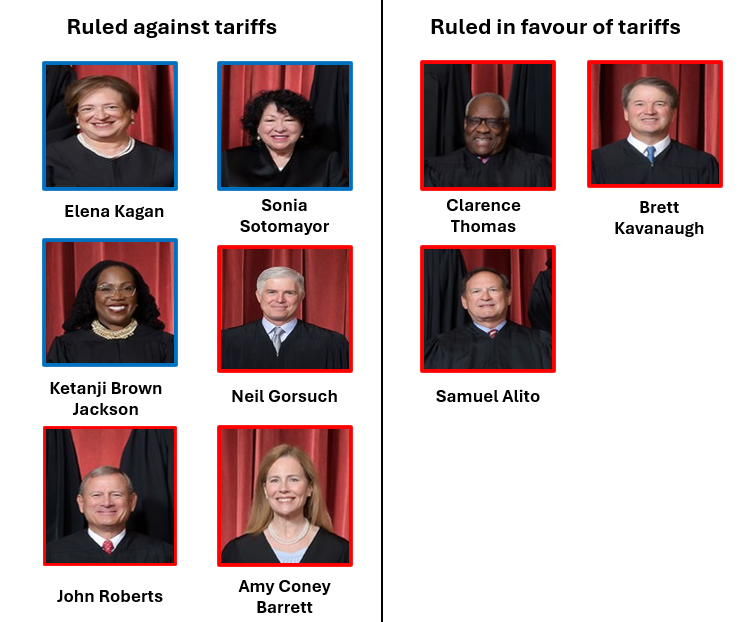
Learning Resources Inc v. Trump is a good example of the checks and balances that the constitution places upon the President. In this case it is the Supreme Court checking the power of the President rather than Congress. Moreover, it also goes to show that Presidential appointees to the Supreme Court don’t always comply with the wishes of the President who appointed them. The justices are often more independent minded than they are given credit for and will interpret the constitution as they, rather than the President who appointed them, sees fit.