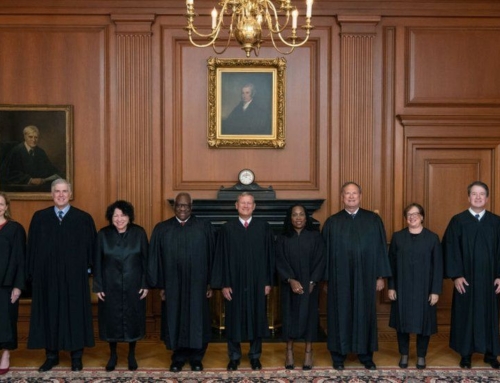
Will the US Supreme Court save Tik Tok?
In April 2024, Congress passed the Protecting Americans from Foreign Adversary Controlled Applications Act. The act passed overwhelming in both houses (360-58 in the House and 79-18 in the Senate) and therefore was done so with bi-partisan support from both Democrats and Republican members of Congress. The act allows the US government to ban any website or app that it believes is controlled by a foreign government.
The primary target of the act is Tik Tok which is owned by ByteDance, whom the American government believes is too closely tied to the Chinese government, who could in turn access Tik Tok’s data to spy on American citizens. ByteDance have said that the Chinese government had no ownership stake in Tik Tok. The Biden Administration believes overwise.
The case will now go before the Supreme Court on January 10th 2025 under the title Tik Tok v Garland. The former leader of the Republican Party in the Senate, Mitch McConnell has filed an amicus brief defending the law with the Supreme Court in which he argued that the right to free speech ‘does not apply to a corporate agent of the Chinese Communist Party’. On the other hand, groups such as the American Civil Liberties Union have defended Tik Tok, arguing that a ban would severely limit ‘a vast universe of expressive content’.
If the Supreme Court does not come to Tik Tok’s rescue than the President elect, Donald Trump may do. Trump has 14.7million followers on Tik Tok and says that he could broker a compromise to allow the app to remain available to millions of Americans. However, if the court determines that the Protecting Americans from Foreign Adversary Controlled Applications Act is constitutional than there is little that Trump can do to save Tik Tok.
How might you use this in an exam?
As an example of Bi-partisanship in Congress
- The Protecting Americans from Foreign Adversary Controlled Applications Act passed with Bi-partisan support in Congress.
As an example of a Supreme Court case revolving around First Amendment Rights
The importance of interest group activity on the Supreme Court
- Individuals and groups raging from Mitch McConnell to the American Civil Liberties Union have filed amicus briefs with the court.
The limited power of the President
- Trump has suggested that he would oppose the ban on Tik Tok, but ultimately if the Supreme Court determines that the act is constitutional than Trump can do nothing to save it.