
Prime Ministerial Case Study – Tony Blair
In our previous case studies, we have focused on two questions:
- Can Prime Ministers do whatever they want/ What are the limitations on the Prime
- To what extent can a Prime Minister control the cabinet?
Tony Blair is an example of a Prime Minister who had very few limitations on their power. His Labour Party won a 179-seat majority at the 1997 election. Four years later in 2001, he won another 176-seat majority. The size of his majorities were unprecedented in modern political history and as such gave him almost free will to implement the policies of his liking. Except he didn’t. Though Blair had numerous policy achievements as Prime Minister he didn’t transform the country in the way that Margaret Thatcher had done. This despite having a much stronger set of circumstances than Thatcher had on becoming Prime Minister.

One reason why Blair was never fully able to take advantage of his power was simply because he was never fully sure of what he wanted to achieve and when he was sure he was always quite conservative (with a small c!) in his ambitions. Take House of Lords reform. Blair could easily have abolished the House of Lords. He had the majority and the public support to do so and even the Lords themselves would not be able to stop him had he wanted to do so. But he didn’t. Eventually, Blair compromised and allowed 92 hereditary peers to remain in the House of Lords and didn’t fundamentally change the practice of appointing life peers, whom could still be nominated by the Prime Minister, a practice which often led to questions over cronyism. This was an example of how Blair’s inherent moderation and conservatism prevented him from carrying out more ambitious changes. The same was true over issues such as public service reform which was supposedly close to Blair’s heart. Blair never saw ripping up the system and implement something new as the solution, he just wanted the existing system to do better. So, Blair created foundation hospitals and academy schools but never sought to make large scale changes to education of health. Ironically, Blair was much more productive in his final term, of which he only served two years. It is ironic as by this time Blair’s majority had declined to a much more modest, but workable, 66. The difference being that by 2005, Blair had a clearer idea of what he wanted to do and how it could be done. So, a large majority can allow the Prime Minister to do whatever they want, but first they really must have a clear idea of what they want doing.
Blair also had one further limitation, his own chancellor, Gordon Brown. Brown proved to be a second centre of power in the government and he was a consistent block on some of Blair public service reforms, always keeping a firm gripping on public spending. Perhaps most famously, it was Brown who prevented Blair from agreeing for Britain to join the new single European currency, the Euro. Blair was keen but Brown outlined 5 key economic targets that he said Britain had to make if it was to join. This effectively blocked any attempt by Blair to bring Britain closer to Europe. A different Prime Minister might have sacked Brown or demoted him from the Treasury to the Foreign Office. But Blair, believing this might cause problems within the Labour Party and create an even more powerful adversary on the backbenches decided against it.
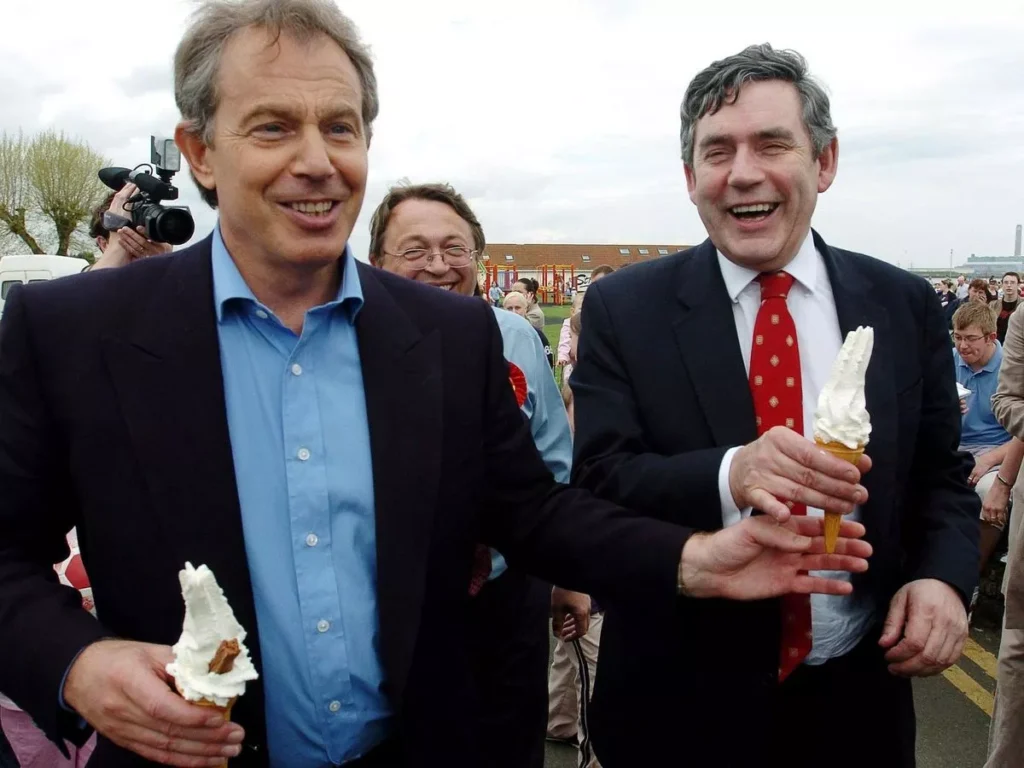
Tony Blair is therefore an excellent case study in how even the most powerful Prime Minister can still very rarely do as they please. No Prime Minister can act without impediment.


