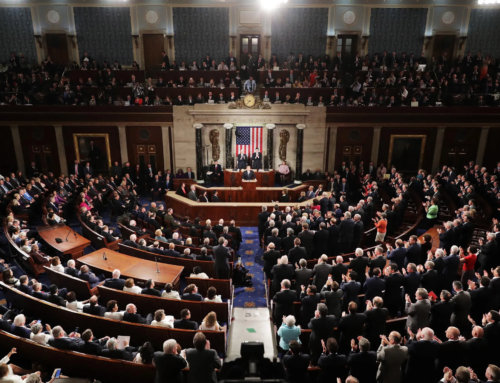
Trump’s One Big beautiful Bill Act, July 2025
In July 2025, President Trump signed the One Big Beautiful Bill Act into law. The legislation included major tax cuts for the wealthiest Americans, while also slashing funding for Medicaid and food stamps—programs heavily relied upon by the poorest. Analysts project that the bill will add $3.3 trillion to the national debt over the next decade, a figure that has raised concerns among some Republicans.
As expected, Democrats were unanimously opposed to the bill. Nevertheless, it passed both the House and the Senate. In the House, all Democrats voted against it, joined by only two Republicans. In the Senate, three Republicans—Susan Collins, Rand Paul, and Thom Tillis—also opposed the bill, resulting in a 50–50 tie. The bill ultimately passed thanks to a tiebreaking vote cast by Vice President J.D. Vance.
Why did so many Republicans vote in favour?
The main reason many Republicans set aside their reservations was loyalty to President Trump and his political agenda. For many GOP lawmakers—particularly in the House—supporting Trump has been essential to maintaining their seats. Republican voters increasingly expect their representatives to back Trump unequivocally, and Trump has not hesitated to endorse primary challengers against those who oppose him. This was the case with Representative Brian Kilpatrick, who voted against the bill and soon faced calls for a primary challenge.
Political calculations also played a role. Senator Lisa Murkowski of Alaska described her vote as “agonizing,” but ultimately supported the bill in part because it included provisions benefiting Alaska’s whaling industry.
Ultimately, the passage of the One Big Beautiful Bill Act was a further demonstration of the command that President Trump has over the Republican Party.
It is therefore a great example, of how the Executive can control the legislature in US Politics, as long as the executive and the legislature are held by the same party. Nonetheless, the passage of the bill comes at the start of Trump’s second term as President. If the bill was making its way through Congress at a later date it is likely that many Republicans would have been less supportive, wary of their impending re-election campaign and need to appease their constituents, a particularly pressing concern for those in swing districts.